
H-ROOTS Education Program
Human Rights Overseas Opportunities for Travel and Study
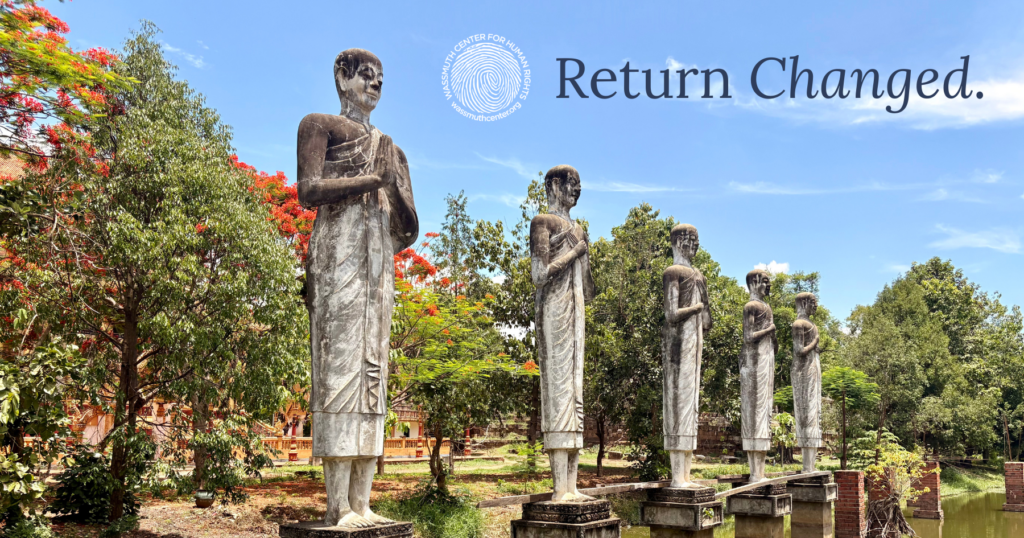
What does it take for a community to survive catastrophe - and then rebuild?
H-ROOTS doesn’t ask you to study that question from a classroom. It takes you to the places where the answer is still being written, and sets you alongside the people living it. In Spring 2027, the Wassmuth Center for Human Rights invites you on a journey into Vietnam and Cambodia — two countries whose twentieth-century histories hold some of the most challenging lessons in human rights the world has to offer. This is travel for adults who want the places they visit to ask something of them, and who trust their curiosity to lead the way.
For thirty years the Wassmuth Center has helped people build just and joyful communities where every person’s dignity is honored — from the Idaho Anne Frank Human Rights Memorial to classrooms across Idaho and far beyond. The Center has carried this work overseas before, through international programs. H-ROOTS is that tradition reimagined: with deeper learning before you go, richer reflection when you return, and a living connection to the next generation of human rights leaders. Join two Wassmuth Center team members and a group of other adult travelers, and you’ll help shape the very first cohort!
The journey begins long before anyone boards a plane. In the months leading up to departure, you and your fellow travelers will gather three times in person, building real community while you begin to study the history and culture of Southeast Asia. You’ll also connect with the high school students in the Wassmuth Center’s H-RISE (Human Rights International Service-Learning Education) Leadership Program, who will follow your route through the same cities just a few months later in June 2027. When both groups are home, you’ll reflect together, comparing what you each carried back from the same ground — seeing how one generation’s questions take root in the next.
Vietnam and Cambodia will teach you in ways no book can. You’ll descend into the Cu Chi Tunnels and hear a Vietnamese veteran describe what you’ve only read about. You’ll stand at Tuol Sleng and Choeung Ek as a survivor explains how a society slides into genocide — and how it finds its way back.
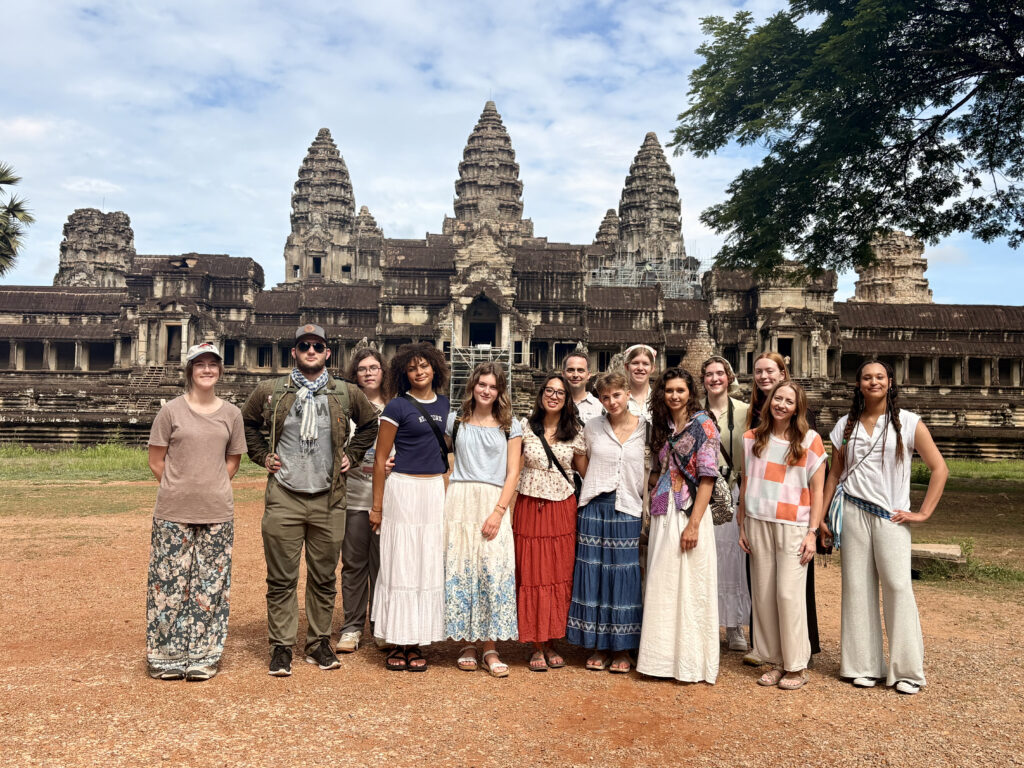
Loss is only part of what these countries have to teach. You’ll experience history and beauty side by side at Angkor Wat, share a meal in a traditional Khmer cooking class, and sit with Buddhist monks who’ve spent their lives asking what carries a people forward. You’ll spend an afternoon with dancers and musicians at the Champey Academy of the Arts, watching centuries-old traditions performed with unmistakable pride and joy. And you’ll meet local NGO leaders and neighbors doing the daily work of repair: clearing landmines, rebuilding schools, turning hard histories into livable futures.
You won’t face any of it unprepared. Online learning modules will help you build the background to truly understand what you’re seeing. Wassmuth Center educators will be at your side through all of it — before, during, and long after the trip.
This isn’t a tour. It’s an immersion — into history, into questions that don’t resolve neatly, into the human rights challenges these communities still face today. You’ll come home with far more than photographs. You’ll return changed, carrying the stories of the people you met and a deeper commitment to the work of human dignity. You’ll develop a clearer sense of where injustice takes root and what helps a community grow back.
At a Glance: H-ROOTS in Spring 2027 — Vietnam and Cambodia
- Arrive in Ho Chi Minh City, Vietnam by Tuesday, March 2, 2027 and depart from Siem Reap, Cambodia on Friday, March 12. Please see the detailed itinerary below.
- Program cost is $5,400 per person, which includes:
- 4 – 5 star accommodations for 10 nights
- 30 meals
- All entrance fees
- Speed boat from Vietnam to Cambodia
- Cooking class
- Dinner show
- Private English speaking guide and local guides
- Private air conditioned bus
- Tips for our guide and bus driver
- Wassmuth Center online learning modules and in-person pre- and post-trip sessions
- Travelers are responsible for airfare, travel insurance, passport, and visas.
- Single rooms are available for an additional $775 charge.
Itinerary
(Subject to small changes and does not include meal schedule.)
Day 1: Dignity
Your journey begins as you land in Ho Chi Minh City and settle in at the Caravelle Saigon, a storied landmark in the heart of the city. From there we set out on foot through District 1, tracing the city’s French colonial heritage and its transformation into Vietnam’s commercial center. We’ll move through the energy of Ben Thanh Market, past the grand colonial-era Central Post Office, and up to the twin spires of Notre-Dame Cathedral. This first day sets our compass: to look past the monuments to the people, and to honor the dignity of every life this city has held.
Day 2: Colonization and the Right to Self-Determination
We will begin the day at the Independence/Reunification Palace, one of Vietnam’s most important political landmarks. We’ll trace the evolution of the site through different historical periods, from French Indochina to national reunification. We’ll also visit the underground bunker where original communication equipment, war maps, and command rooms remain preserved, providing insight into the final years of the Vietnam War. In the afternoon, we’ll talk with leaders at a local NGO who are doing the daily work of building opportunity. We will gain a deeper understanding of educational challenges, social development initiatives, and community empowerment programs. Then we will conclude the day with a stroll along Nguyen Van Binh Book Street. Browse books on Vietnamese history, literature, and contemporary society while observing how reading culture continues to play a role in modern urban life.
Day 3: Perspective
Begin the day with visits to several important cultural and historical sites in Ho Chi Minh City. At the War Remnants Museum we’ll confront the war through Vietnamese eyes; at the Thich Quang Duc Memorial we’ll stand where a single act of protest stopped the world; and at the Southern Women’s Museum we’ll meet the women whose courage rarely reaches textbooks. The rest of the day is yours to explore the city at your own pace.
Day 4: Resistance and Resilience
Descend into the Cu Chi Tunnels — miles of hand-dug passages that tell a story of astonishing resolve — and hear it firsthand from a veteran who lived it. In the afternoon we’ll travel to Chau Doc, near the Cambodian border, where the countryside will open up around us.
Day 5: Land, Water, and Borders
We trade the road for the water, taking a high-speed boat across the border and up to Phnom Penh. After settling into the Capri Hotel, we’ll take an evening stroll along Chaktomuk — the riverfront where three great rivers meet — and feel the day’s questions come alive beneath your feet.
Day 6: Genocide and the Spiral of Injustice
This is among the journey’s hardest and most necessary days. At the Tuol Sleng Genocide Museum and the Choeung Ek Memorial, we’ll come face to face with the Khmer Rouge era — and the root causes that let it take hold. We’ll do so in the presence of a survivor who carries that history and shares it with us.
Day 7: Memory
Memory as an act of resistance. You’ll watch traditional arts reborn at the Champey Academy of the Arts, where young dancers and musicians keep their cultural roots alive — a heritage the Khmer Rouge tried to erase. Then we’ll tour Phnom Penh by cyclo before visiting the Documentation Center of Cambodia, whose painstaking record-keeping is helping to make justice possible. A tour of the Royal Palace closes the day.
Day 8: Culture and Continuity, Part 1
The day opens at the US Embassy before we journey by road toward Siem Reap, pausing at a lively roadside market and a village of traditional silversmiths along the way. After checking in at the Kulen Central Hotel, we will attend a traditional Cambodian cooking class where we will prepare our own delicious dinner.
Day 9: Culture and Continuity, Part 2
Today is pure awe. We’ll explore the temple-city of Angkor Wat, the walled grandeur of Angkor Thom, and the jungle-wrapped ruins of Ta Prohm. Afterwards, we’ll visit a monastery for a conversation with Buddhist monks, then close the evening over a buffet dinner and stunning performance of classical Khmer dance.
Day 10: Solidarity and Repair
Our final full day turns toward repair. At APOPO, we’ll meet the teams — and the detection trained “hero rats” — working to clear the landmines that still threaten Cambodian communities. At the Cambodia Landmine Museum, we’ll learn from people who have dedicated their lives to undoing the damage of war. The afternoon is yours before we gather for a farewell dinner.
Day 11: Goodbye for Now
We say our goodbyes in Siem Reap.