
From the First Stewards to Our Shared Future
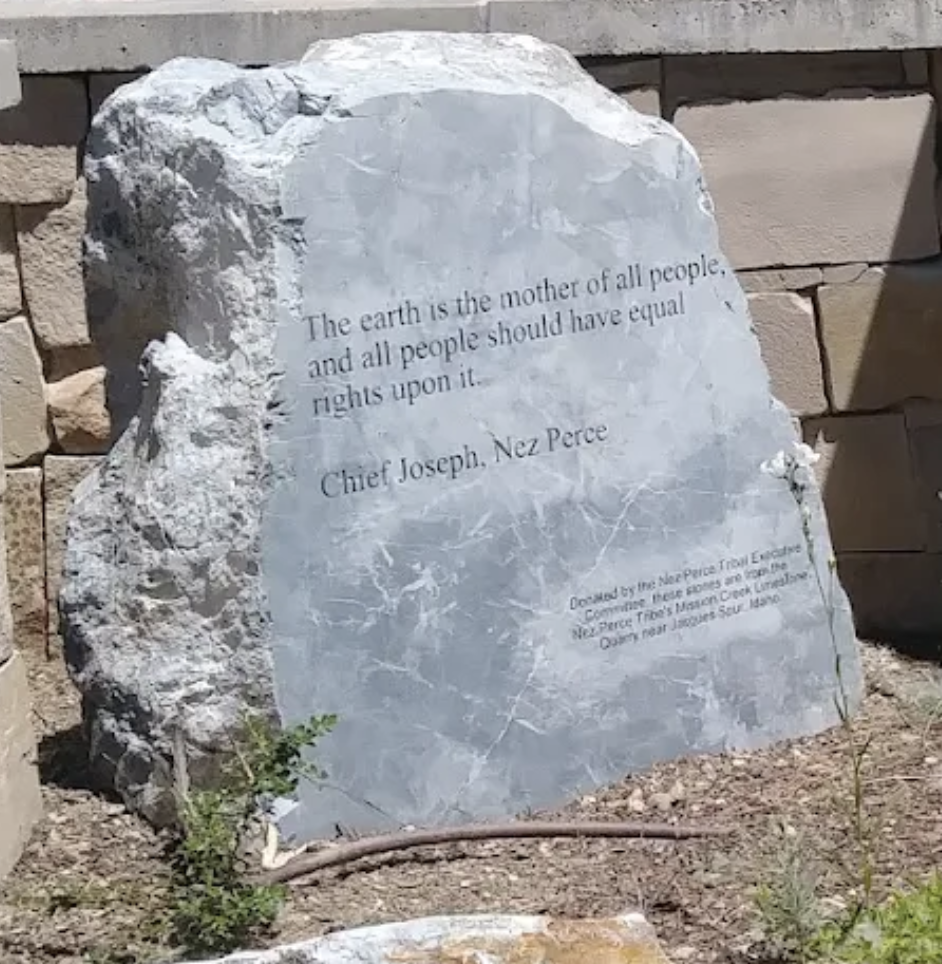
From the First Stewards to Our Shared Future October 12, 2025 On Indigenous Peoples’ Day, we honor the original stewards of this land: the many Indigenous nations whose deep relationship with the earth has sustained life here for thousands of years. We acknowledge that we live on lands long cared for, named, and nourished by them—lands whose stories continue to shape us today. Despite immense loss and displacement through colonization, Indigenous peoples continue to protect the land, preserve their cultures, and advocate for justice and sovereignty. Their histories are not separate from the American story. They are its beginning, its grounding, and its foundation. To consider what it means to be an American is to confront the complexity of this shared story. For generations, a single, simplified version dominated. This telling of history celebrated pilgrims “discovering” a new continent, subduing the land and its inhabitants, and building a democracy promising liberty and justice for all. But history told only through triumph leaves out truth. And without truth, the promise of freedom cannot stand. Over time, voices once silenced have broadened and deepened the American story—Indigenous peoples and enslaved Africans, immigrants and refugees, women and laborers, LGBTQ+ individuals and people with disabilities, and everyone else who expanded the definition of freedom through struggle and persistence. Their stories challenge us to understand that being an American is not about sameness or supremacy. Being an American is about our shared capacity to confront injustice, repair harm, and imagine something better together. When we listen to these stories, we also learn that being American is not a static identity. It is continuously shaped by the narratives that surround us. We learn from Indigenous practices that heal forests and rivers, from immigrants whose creativity fuels innovation, and from neighbors who show up for one another in times of crisis. The soul of this country lives not only in its founding documents, but in the moments of joy, creativity, and care that bind us to one another. So what does it mean to be an American? It means refusing to settle for a story that excludes. It means expanding our understanding of who “we, the people” truly are. And it means gathering the fragments of our past, proud and painful alike, to weave a living tapestry that holds every story, every struggle, and every triumph in its threads. Only then can we move forward, together, toward the America we have yet to become. Imagine an America brave enough to face its full story, humble enough to learn from it, and courageous enough to include every voice in crafting the next chapter. In this tapestry, each of us is both thread and weaver, bound together by the stories we honor, the justice we pursue, and the hope we carry for generations to come.
The Courage to Listen
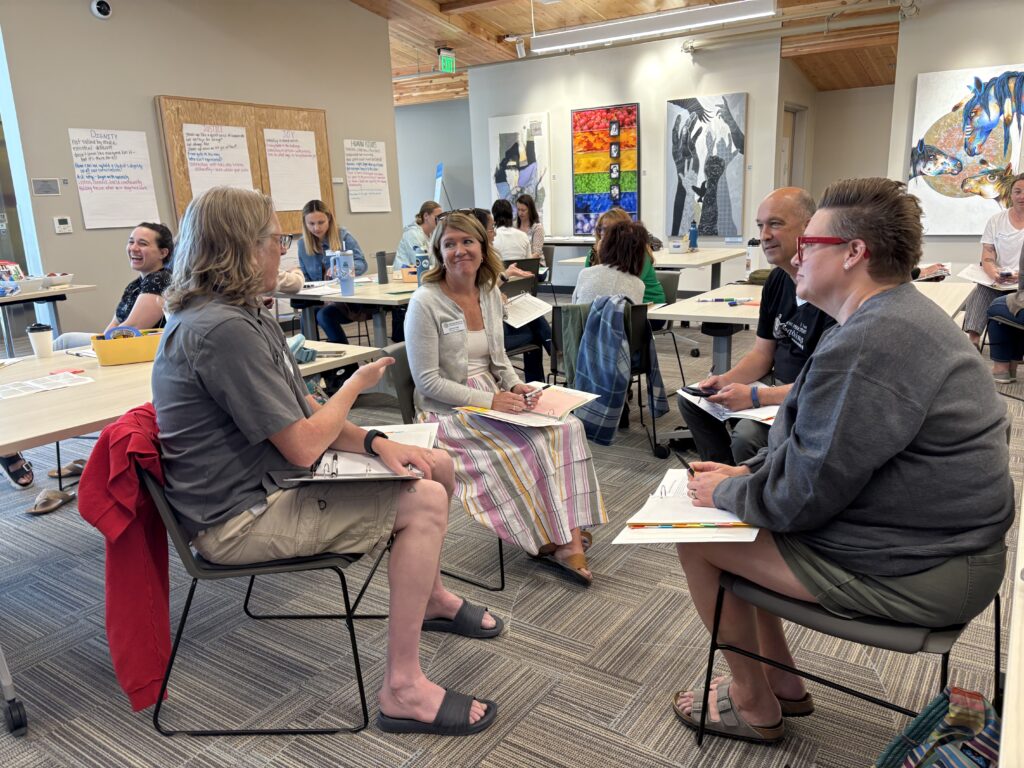
The Courage to Listen October 6, 2025 In the work of human rights, it is easy to picture progress as the product of sweeping gestures – marches that fill the streets, speeches that stir nations, laws that enshrine justice. Yet history teaches us that the most powerful change often begins not with speaking, but with listening. This is why Listen Deeply stands as one of the six Wassmuth Powerful Practices. Lasting change does not only emerge from the words we proclaim but from the courage to hear and honor the truths of others. To listen deeply is to offer your full presence to another person. Not simply to hear their words but to seek to understand their feelings, perspectives, and needs. It is listening without interrupting, judging, or rushing to fix. At its heart, it is an act of honoring the dignity of another person. History shows us again and again that listening is transformative. During the Civil Rights Movement, long before Dr. King’s words rang out at the Lincoln Memorial, countless living rooms, church basements, and community halls were filled with stories. Black citizens who had endured exclusion, discrimination, and violence shared their lived realities. White allies who would go on to volunteer and organize were shaped by listening, truly listening, to those truths. The courage to act began in the willingness to hear. The women’s suffrage movement offers another lesson. Before the 19th Amendment, advocates crisscrossed the country collecting testimonies from women whose voices had been shut out of public life. Their stories of working, raising families, and contributing to their communities without representation shifted hearts and minds. Lawmakers were not persuaded by arguments alone; they were moved by the lived experiences of women who shared their stories. Listening made space for a new vision of democracy. The farmworker movement of the 1960s tells a similar story. Cesar Chavez and Dolores Huerta did not start with speeches or legislation. They began by sitting with farmworkers in the fields and kitchens of California’s Central Valley. They listened to stories of long hours, low pay, and unsafe conditions. From that deep listening grew a movement that redefined labor rights in the United States. Their leadership was rooted not in speaking first, but in honoring the voices of those most impacted. These moments remind us that deep listening is revolutionary. It affirms humanity, builds trust, and uncovers truths that might otherwise remain hidden. In a world that rushes past pain, listening slows us down. It changes how we relate to others and to ourselves, opening the door to a more expansive way of being. The practice itself is simple, though not easy. It asks us to be fully present, to set aside distractions so that the person before us knows they matter. Deep listening invites silence rather than rushing to fill it, reflection rather than assumption, curiosity rather than judgement. It asks us to listen not only for words but for the emotions beneath them and to ask questions that make space for someone else’s truth to unfold. At the Wassmuth Center, we know that advancing human rights requires us to hold this space. Laws may establish rights, but cultures of dignity are sustained by the ways we engage with each other. Listening deeply is a radical way of insisting that every voice matters. It is how we uncover stories of exclusion, recognize harms that may never make headlines, and cultivate the empathy needed for communities where belonging is possible for all. Think of the last time you felt truly heard. Someone gave you the gift of holding space for your truth. How did it shape your trust in them? Your own courage to speak? Now imagine multiplying that experience across classrooms, congregations, workplaces, neighborhoods, and nations. What might shift if our starting point was not persuasion but presence? What if our first move was not to argue but to listen? Might we see each other as fellow humans rather than opponents or enemies? Listening deeply is not simply a skill. It is a moral stance. It is how we create belonging, advance justice, and honor the dignity of every person we meet. Alongside the other five Wassmuth Powerful Practices, it reminds us that building a culture of human rights is not only about what we achieve in the Statehouse, but also about how we choose to show up for one another every day.
The Purpose of Education
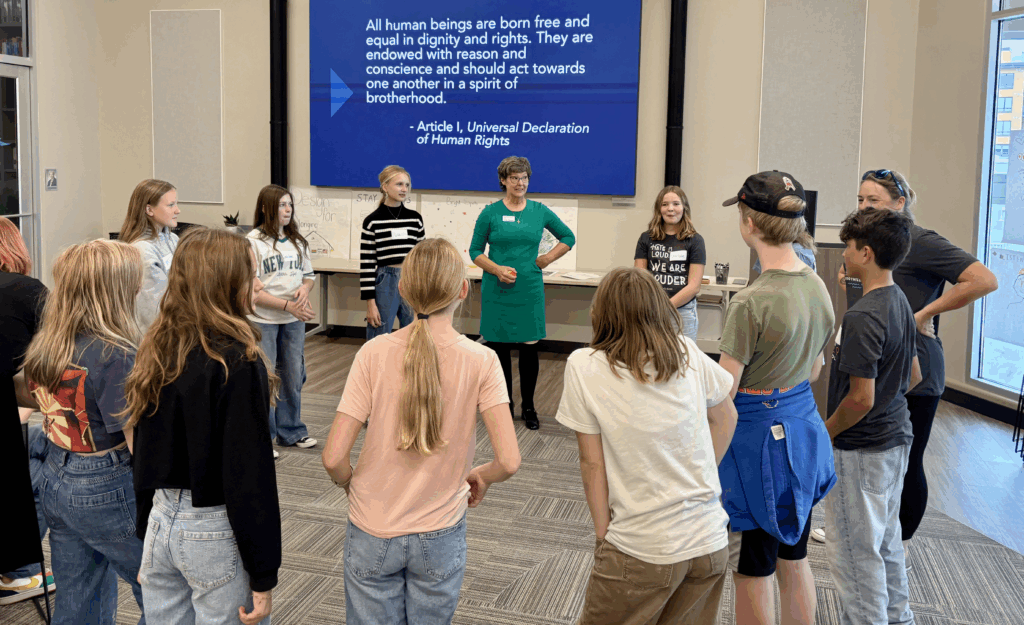
The Purpose of Education September 29, 2025 Across our country, classrooms have become battlegrounds. Books about slavery, civil rights, and LGBTQ+ experiences are removed from shelves in some districts. State legislatures debate which histories can be taught and which are excluded. These disputes raise a fundamental question: what is the purpose of education? Long before today’s controversies, Aristotle offered a guiding insight: “Educating the mind without educating the heart is no education at all.” At the Idaho Anne Frank Human Rights Memorial, these words are etched in stone. They remind us that education is not only about knowledge. It is about shaping the kind of people we become. Will we raise a generation equipped only with (some) facts and formulas, or one capable of empathy, imagination, and ethical responsibility? The very roots of the word educate mean both “to nourish” and “to bring forth.” Education should nourish human potential, calling forth curiosity, courage, and the capacity to engage the world with both rigor and compassion. True education creates spaces where questions are welcomed, mistakes are embraced as part of discovery, and dignity is honored. When reduced to indoctrination, education betrays this higher purpose. Doctrines demand conformity; education cultivates inquiry. Indoctrination closes minds; education expands what can be imagined, examined, and understood. This is why recent calls for “patriotic education” are so troubling. While framed as unity-building, these efforts often strip away complexity, presenting one-sided narratives that risk replacing education with indoctrination. The challenges of our time demand citizens who can analyze with rigor, empathize with depth, balance pride with honesty, and hold hope with responsibility. As debates continue over what students can read, explore, and discuss in school, we must hold fast to the true purpose of education: to grow curiosity, compassion, and courage alongside knowledge. If we want a nation built on decency, integrity, and dignity, we must nurture both hearts and minds—supporting learners to care, to question, and to create communities where everyone can thrive.
Freedom through Dissent

Freedom through Dissent September 22, 2025 When you visit the Wassmuth Center for Human Rights, one of the first works of art you will encounter is Katherine Shaughnessy’s Ginsburg’s Gauntlet. The piece emulates the design of late Supreme Court Justice Ruth Bader Ginsburg’s lace dissent collar, which she wore when authoring dissenting opinions – statements that challenged the majority and preserved an alternative view of the law for the future. This tradition points to something rare and essential: the Supreme Court has a built-in mechanism for dissent. Even at the nation’s highest legal body, where decisions shape generations, space is deliberately created for disagreement. Those dissenting words do more than record opposition; they keep ideas alive, invite debate, and sometimes, years later, become the foundation for new law. Justice John Marshall Harlan’s lone dissent in Plessy v. Ferguson (1896), where the Court upheld racial segregation, declared that “our Constitution is color-blind.” Nearly six decades later, that dissent helped lay the groundwork for Brown v. Board of Education (1954), which struck down segregation in public schools. At a time when division can tempt us to retreat into the comfort of sameness, this model is instructive. Democracy–and the respect for human dignity it requires–demands something higher: holding space for dissent, listening to voices that challenge us, and remembering the humanity of those with whom we disagree. History offers sharp warnings of what happens when that space is denied. During the McCarthy era of the 1950s, Americans were summoned before congressional committees and accused of being communist sympathizers. Teachers were fired, journalists blacklisted, and artists silenced. Their careers were destroyed not for crimes, but for ideas. Fear shrank America’s imagination and eroded trust. We forgot that democracy’s strength lies not in uniformity, but in its ability to tolerate, and even welcome, difference. We see the same danger in Nazi Germany’s book burnings, when officials cast thousands of volumes into the flames – works by Jewish writers, political dissidents, and anyone whose words challenged the regime. Attempts to control what could be read, spoken, or imagined did not bring stability. They deepened fear and destroyed freedom. But there are also inspiring examples of courage in the face of silence. In 1848, women gathered in Seneca Falls, New York, to demand rights long denied. Their declaration that “all men and women are created equal” was ridiculed at the time. But persistence carried their voices forward, reshaping democracy itself. A century later, young people staged sit-ins at segregated lunch counters across the South. By simply taking a seat, they risked insults, beatings, and arrest. Yet their nonviolent dissent laid bare the injustice of segregation and helped bend the conscience of a nation. These stories remind us that freedom of speech is not about only protecting the voices we prefer. It is about ensuring that all voices – unpopular, uncomfortable, or challenging – can enter the public square so that truth and justice can rise on their own strength. Ideas must be allowed to meet one another in the open, where the best ones prove themselves by resonating with possibility. When voices are silenced, coercion replaces democracy. In this moment of deep division, we must remember our shared humanity. Beneath our disagreements, most of us want the same things: to live in peace, to raise our families with dignity, to experience joy, and to pursue our dreams without fear. Human rights affirm these universal yearnings, and protecting dissent is one way to make them a lived reality for all. Like Justice Ginsburg’s dissent collar made disagreement visible and powerful, we too can choose to embrace difference rather than fear it. To hold space for dissent is not weakness. It is strength. It is the work of democracy. It is how we honor human dignity. And it is how we remember that truth does not need force to prevail; it needs freedom.
We Can Stop the Cycle of Violence
We Can Stop the Cycle of Violence September 15, 2025 In a time of rising political violence, one of the hardest and most important things we can do is look inward and ask: How might my words, actions, or assumptions be contributing to division and dehumanization? This self-examination matters because injustice doesn’t suddenly appear full-blown. It unfolds gradually. The Spiral of Injustice shows us that what might seem like “just words” is often the first step in normalizing division and paving the way to violence. The seemingly small ways we speak about and label others lays the groundwork for avoidance, discrimination, violence, and even elimination. Each step strips away humanity. Taking a stand against hate is essential, but when that stance hardens into contempt, we risk losing sight of the very humanity we are trying to defend. Once people become “the other” in our minds, indifference creeps in. And with that, the Spiral accelerates. Martin Luther King Jr. reminded us, “Darkness cannot drive out darkness, only light can do that. Hate cannot drive out hate, only love can do that.” His words challenge us to resist the temptation to meet othering with more othering, and hate with more hate. Pause for a moment. Whose humanity do you struggle to see right now? What story have you told yourself about them? And what would it take to see their full dignity? Interrupting the Spiral of Injustice begins with the choices we make every day. Speaking up when we hear dehumanizing language, refusing to stereotype or dismiss others, and showing respect even in deep disagreement. These deliberate actions slow the Spiral, creating space for justice and belonging. When division threatens to pull us apart, we must choose instead to affirm the full dignity of every person. That is how we interrupt the Spiral and build communities where we can all belong and thrive.
Together We Create Belonging
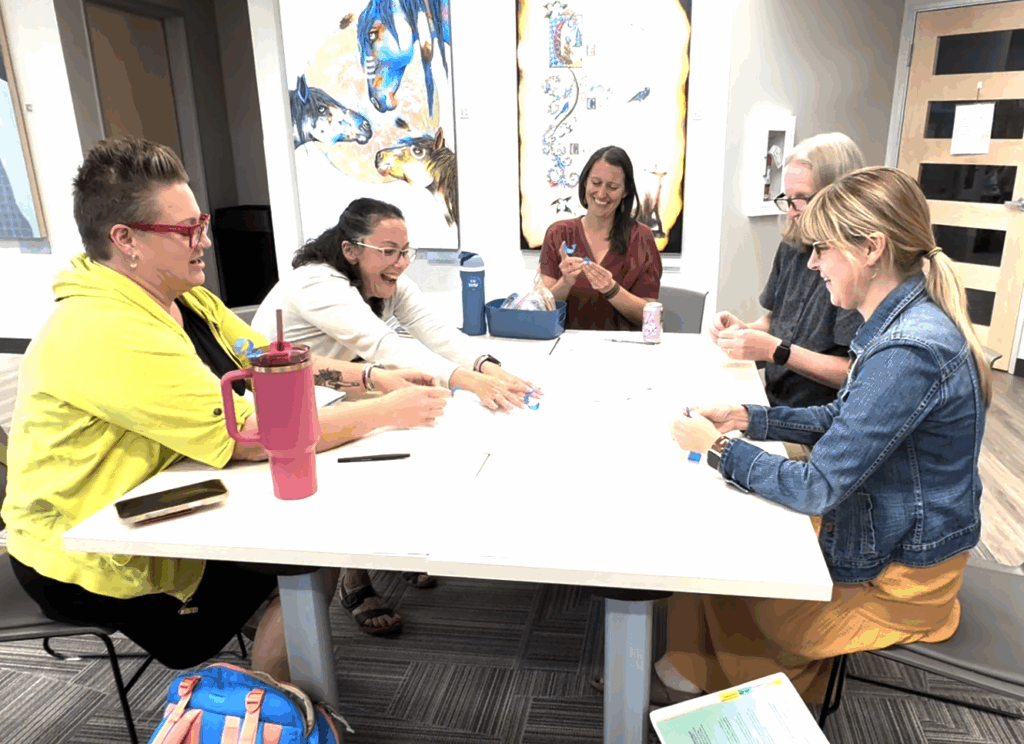
Together We Create Belonging September 8, 2025 At the Wassmuth Center, we hold a simple but profound conviction: everyone is welcome here. We imagine a world where every person’s dignity is honored and human rights are a lived reality for all. Such a vision grows through the choices we make, the spaces we shape, and the relationships we nurture every day. To guide this work, we turn to the Wassmuth Powerful Practices. These intentional actions bring human rights principles to life. Each of the six practices remind us that dignity is upheld not only through laws and institutions, but in quiet gestures, deliberate choices, and daily acts that signal welcome, build trust, and forge connection. This month, we turn to the powerful practice Design for Belonging. Belonging is more than being present in a room. It is being truly seen, genuinely heard, and deeply valued for who you are. It is the assurance that your voice matters, your presence makes a difference, and you can bring your full self without fear of exclusion. Belonging is justice made visible, requiring us to notice inequities, dismantle barriers, and design systems where every person can thrive. This call feels especially urgent right now. Some in our community and around the country are actively working to exclude people, casting suspicion on the simple ideas of belonging, kindness, and inclusion. In response, neighbors have rallied. People wear t-shirts with inclusive messages. Families plant signs in their yards. Groups pool their resources to purchase billboard space. These actions are important, affirming our shared conviction that every child, every neighbor, every person deserves to feel welcome, safe, and valued. The next step is to turn this conviction into daily practice. Shirts and signs declare our values; designing for belonging brings them to life. Belonging comes alive when we shape environments, experiences, and relationships with intention so that every person feels included. When people know they belong, they engage with greater trust, learn with deeper openness, and collaborate with stronger commitment. And this work belongs to all of us. Sometimes our design choices are grand: the architecture of a gathering space, the structure of a community event, the shape of a curriculum. Other times it looks like slowing down to invite someone into a conversation, rethinking the layout of a classroom, or respectfully acknowledging a dissenting view. Whether around a dinner table, in a grocery store, at a library, or in a school, every interaction holds the possibility of belonging. When we design for belonging, we are saying: You are welcome here. You matter. You make this community stronger. And in living this practice, we show that belonging is more than a message to display. It is a promise to uphold. Designing for belonging is how we put justice into practice, ensuring that human rights are not distant ideals but daily realities for all of us.
Women’s Rights are Human Rights
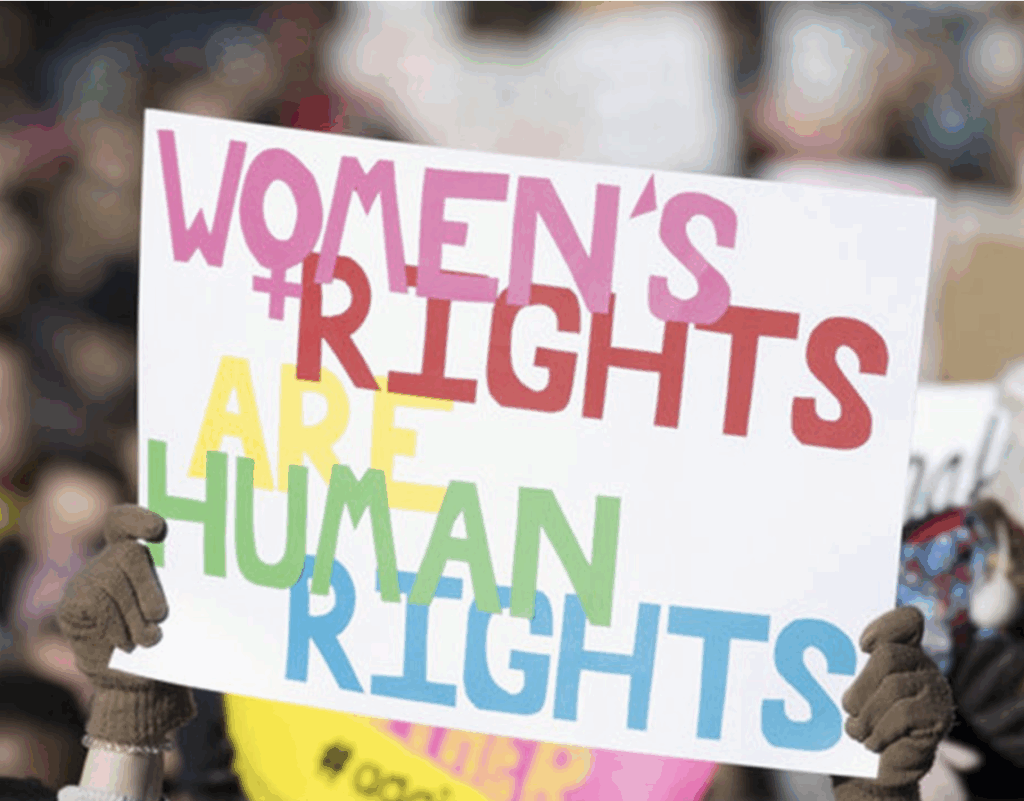
Women’s Rights are Human Rights September 1, 2025 In our nation’s long journey toward a more perfect union, the right to vote was never voluntarily protected. It had to be demanded, defended, and won – often at great personal cost. At our founding, only wealthy, white, land-owning men were allowed to cast a ballot. Every expansion of the franchise came through struggle and sacrifice. Women, after generations of exclusion, secured the vote in one of the hardest-fought victories of all. Each year on August 26, we honor the certification of the 19th Amendment on Women’s Equality Day. This was a watershed moment, an affirmation that women’s voices belong in our democracy. Yet the promise was incomplete in 1920. Many women of color, Indigenous women, immigrant women, and others continued to face legal and structural barriers that kept them from the ballot box for decades. The 19th Amendment opened a door, but the struggle for full enfranchisement – and equal participation in shaping our nation – was far from over. For much of our country’s history, women were largely invisible before the law, defined by their relationships to fathers, brothers, or husbands. Policies shaping healthcare, education, childcare, safety, and financial security were made without their voices. Securing the vote gave women the power to influence elections and laws, reshaping the very foundations of political life. But history reminds us that progress is never guaranteed. Rights once won can be challenged. Recently, prominent political and faith leaders have openly suggested that women should not have the right to vote, arguing that a household should speak with only one voice: the man’s. This ideology seeks to silence women. This is why we must affirm a fundamental truth: women of every background are central to a strong, vibrant political system. Their voices, perspectives, and leadership enrich our communities and strengthen democracy. Yet they continue to face attempts to undermine their health, safety, autonomy, and influence. Protecting their rights is not only a women’s issue; it is a human rights imperative. Our nation’s ongoing journey toward a more perfect union depends on expanding the promise of representation, not limiting it. And so, the work continues. Just as generations before us demanded inclusion in the democratic process, it is now our responsibility to protect and expand it. A future of dignity, equality, and belonging will not happen by chance. It will be built by all of us, together.
In a Divided World, We Choose Connection

In a Divided World, We Choose Connection August 26, 2025 Division is everywhere. Neighbors pitted against each other over politics. Entire groups reduced to labels. Online spaces flooded with outrage. It can feel as if mistrust and polarization are permanent, leaving many to wonder whether we can ever find our way back to each other. The Wassmuth Center is here to meet this moment. When division weighs heavily, we provide spaces where our community can come together to connect, learn, and create. At the Center, we endeavor to practice what human rights require: choosing connection over isolation, learning over indifference, and creation over despair. Connection begins with story. In our programs, we support people to set aside labels and encounter one another as human beings. Hearing a Holocaust survivor describe how prejudice became law, listening to a refugee share what it means to rebuild their life in Idaho, or reading the memoir of someone experiencing homelessness transforms our understanding. Each story becomes a thread, weaving us closer together and reminding us that dignity is defended not in theory, but in relationship. And these connections open us up to learning. At the Wassmuth Center we use the Spiral of Injustice to learn how dehumanization begins with stereotypes and escalates into exclusion, discrimination, and violence. We see these same patterns play out today in rhetoric that normalizes “us versus them,” in policies that blindly target entire groups, and in the casual dismissal of people’s humanity. Learning this history equips us with the tools to recognize warning signs and the courage to act before harm deepens. And once we experience connection and engage in learning, we are prepared to effectively create. Creation starts with imagination: What could our world look like if human rights were a lived reality for everyone? It requires the courage to picture a world that looks different from the one we see now. At the Center, imagination is sustained through deep listening and collective visioning: young people identifying ways to make our community more equitable, teachers reimagining classrooms as places of belonging, and neighbors finding common ground across difference. Each act of imagination pushes back against despair and brings us closer to the future we long for. The Wassmuth Center is not just a building and a memorial; we are a community and a living invitation to connect, learn, and create together. At a time when divisions are pulling people apart across our nation, we are determined to build a counter-story here in Idaho and beyond: one where human rights are a lived reality for everyone. But this vision is only possible if we work together. Every person who joins in – by connecting with a neighbor who has a different perspective, slowing down to learn and deepen their understanding, or engaging in the hard work of creating places and policies that honor everyone’s dignity – becomes part of the fabric of hope we are weaving. The choice before us is urgent and clear. We can resign ourselves to a world where division hardens into hate, or we can insist on another way. At the Wassmuth Center, we choose connection. We choose learning. We choose creating a world for all of us.
Freedom of Belief, Freedom for All
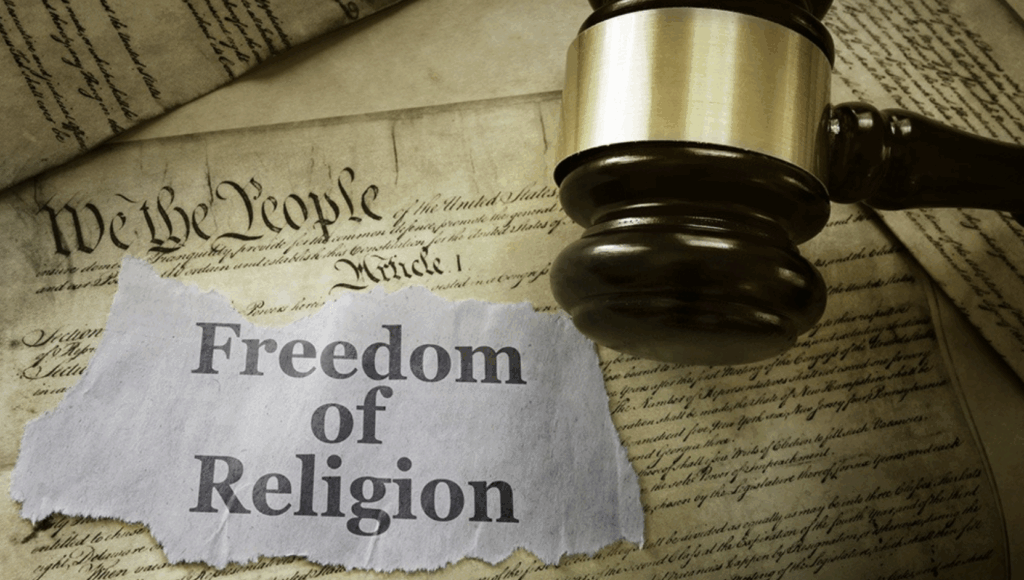
Freedom of Belief, Freedom for All August 18, 2025 America’s founders understood a timeless truth: faith must be freely chosen, never dictated by the state. This principle shaped the First Amendment, which guarantees both the free exercise of religion and protection from government establishment of religion. These freedoms make pluralism possible – allowing people of every faith, and of no faith at all, to live together under shared laws. Pluralism is not passive tolerance; it is the active, ongoing work of building a society where deep differences can peacefully coexist. That commitment to pluralism is what sustains our democracy, which has endured for more than two centuries because we defend each person’s right to believe freely. But this safeguard is under growing pressure. In recent months, political rhetoric and policy decisions have elevated one form of religion within the highest levels of American government. When elected leaders begin telling people what they must believe, whose morality is “correct,” or what values are mandatory, we step away from pluralism and toward a theocracy where religious authority and government power are dangerously entangled. At the Pentagon, Defense Secretary Pete Hegseth has infused military policy with overt Christian nationalist messaging, endorsing extremist pastors while targeting transgender service members and women in leadership. These actions politicize the military, breaching the constitutional wall between church and state. In Texas, Senate Bill 10 mandates the display of the Ten Commandments in every public school classroom. This law directly violates the Establishment Clause. In Idaho, legislators plan to reintroduce a bill requiring reading the Bible in public schools. Similar efforts are surfacing across the country. Meanwhile, the newly formed Religious Liberty Commission and White House Faith Office amplify select religious voices, blurring the line between personal belief and public policy. Coupled with a weakened Johnson Amendment—which once prohibited churches from endorsing political candidates—these shifts invite houses of worship to become political platforms. Individually, these developments might be framed as policy debates. But taken together, they signal a coordinated drift away from pluralism and toward privileging one belief system over all others. History warns us where this road leads. After the 1979 revolution in Iran, leaders promised a purified society. Instead, they imposed a rigid theocracy that stripped women of basic rights, punished dissent, and crushed diversity of thought. Afghanistan under Taliban rule offers a similar warning: girls barred from school, art and music banned, men flogged for beards deemed too short, and daily life policed in the name of faith. Even centuries earlier, the Spanish Inquisition showed how the union of church and state breeds persecution, torture, and exile. None of these societies became more moral or just; they became more oppressive, less creative, and more divided. The lesson is clear: morality imposed from above becomes control, not conviction. A healthy democracy, on the other hand, ensures that beliefs are embraced freely — not demanded by law. Pluralism doesn’t weaken our values. It is how we live them out. Public policy must be grounded in universal human rights, not theological doctrine. Our government should neither endorse nor exclude religion from public life, but preserve the freedom of conscience that gives faith its meaning. If we value freedom, we must pay attention now. Theocracy does not arrive overnight; it advances through gradual normalization. We can still choose a different path. By grounding public life in human rights—and by keeping government power firmly separate from religious authority—we preserve both our democracy and the authentic freedom of belief that pluralism protects. The strength of our nation has never depended on everyone believing the same thing. America has endured because we protect each person’s right to live by their own conscience. At the Wassmuth Center, we know that making human rights a lived reality for all requires defending this freedom, especially when it is under duress. Pluralism is not a threat; it is the foundation that allows dignity and justice to flourish. The choice before us is clear: uphold freedom of belief for everyone, or risk losing it for all. By defending this freedom, we preserve the human rights that belong to every person and ensure that our society remains a place where all can live with dignity.
Everyone–Truly Everyone–Is Welcome Here
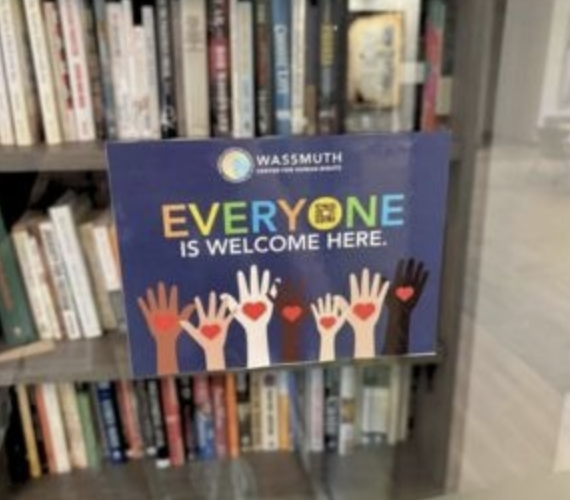
Everyone–Truly Everyone–Is Welcome Here July 28, 2025 At the Wassmuth Center for Human Rights, we believe that the truest measure of any law is how well it upholds human dignity. History reminds us that legal systems have too often been used to silence, exclude, and marginalize rather than to protect and uplift. True justice requires moral clarity, ethical courage, and an unwavering commitment to the dignity of all people. Today, this commitment is being tested. A recent legal opinion questioned whether the message Everyone is Welcome Here belongs in Idaho schools, challenging the fundamental obligation public schools have to welcome all children. In a troubling reading, four words rooted in kindness and inclusion were treated as suspect, as though welcoming students of all backgrounds is somehow a partisan stance. This isn’t just a flawed interpretation of the law. It’s an attempt to undermine the very values that hold our communities together. Everyone is Welcome Here is not a political slogan. It is a moral affirmation. It reflects our shared responsibility to create learning spaces where every child feels safe, seen, and valued. To argue otherwise is to invent division where none exists, to politicize compassion, and to erode the foundation of a just society. This moment reveals a deeper crisis: when legal guidance is politicized, it threatens the integrity of our institutions and the rights of those they are meant to protect. Neutrality in education does not mean silence in the face of exclusion. It means actively ensuring that no student is made to feel invisible or unworthy. When laws are weaponized, even the simplest expressions of decency are put at risk. As a new school year draws near, the chilling effect of this decision will likely leave students feeling less safe and educators afraid. Both of these outcomes are deeply damaging to learning and growth. At the Wassmuth Center, we know that advancing human rights requires more than resisting injustice. It requires building something better. That means crafting policies rooted in dignity, challenging narratives that divide us, and creating communities where every person belongs. Everyone is Welcome Here is more than a message on a wall. It is an actionable human rights commitment grounded in the Universal Declaration of Human Rights and in our moral responsibility to one another. We stand firmly on this ethical ground. Human dignity cannot be legislated away or sidelined by political rhetoric. Every child and every community member has the right to be welcomed and affirmed in our public spaces. As we face challenges to these enduring truths, we renew our commitment to elevate voices for justice and to build a future where everyone–truly everyone–is welcome.